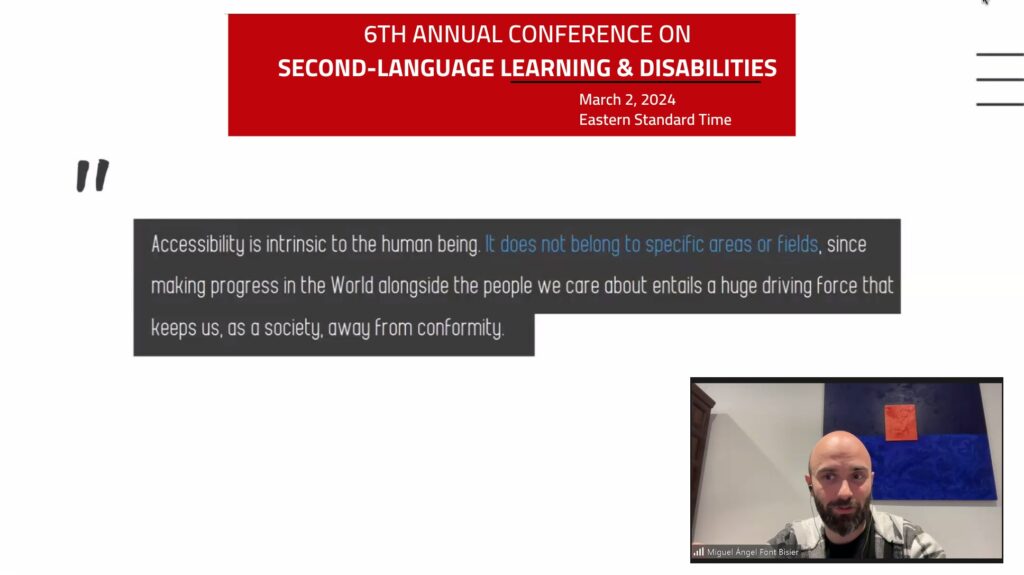
Last Saturday we were invited by the Boston University to give a lecture in the 6th Annual Conference on Second-Language Learning & Disabilities. As you may check on previous blog articles, it’s not the first time we take part in this wonderful conference, and this year we prepared a very special talk titled «Universal Design Learning in Action: A Filmic Approach to Language Learning».
We want to share with you our first inclusive short-film: Blues Time.
This version of the film features English SDH subtitles.
These subtitles are designed, mainly, for deaf or hard-of-hearing viewers. They offer any audible information relevant for the understanding of the plot. SDH are displayed in various places on the screen. Dialogues are highlighted in different colors.
Today we are here to share with you all our new sign language project: the tale La dama del cuadro (The lady in the painting).
This story is available in the book Un confinamiento de cuentos (Stories of a lockdown), an anthology written over the three months of the lockdown imposed during the COVID-19 pandemic. On the occasion of the International Day of Sign Languages, we decided to publish a really special idea we had about La dama del cuadro, which you may know discover all about in this article.
Illustration for the story La dama del cuadro, by Badyr Askandar.
Utilizamos Cookies técnicas propias y de terceros con finalidades analíticas. Puedes configurar o rechazar las Cookies haciendo click en "Configuración de Cookies". También puedes aceptar todas pulsando el botón "Aceptar todas las Cookies". Para más información puedes visitar nuestra Política de Cookies.